
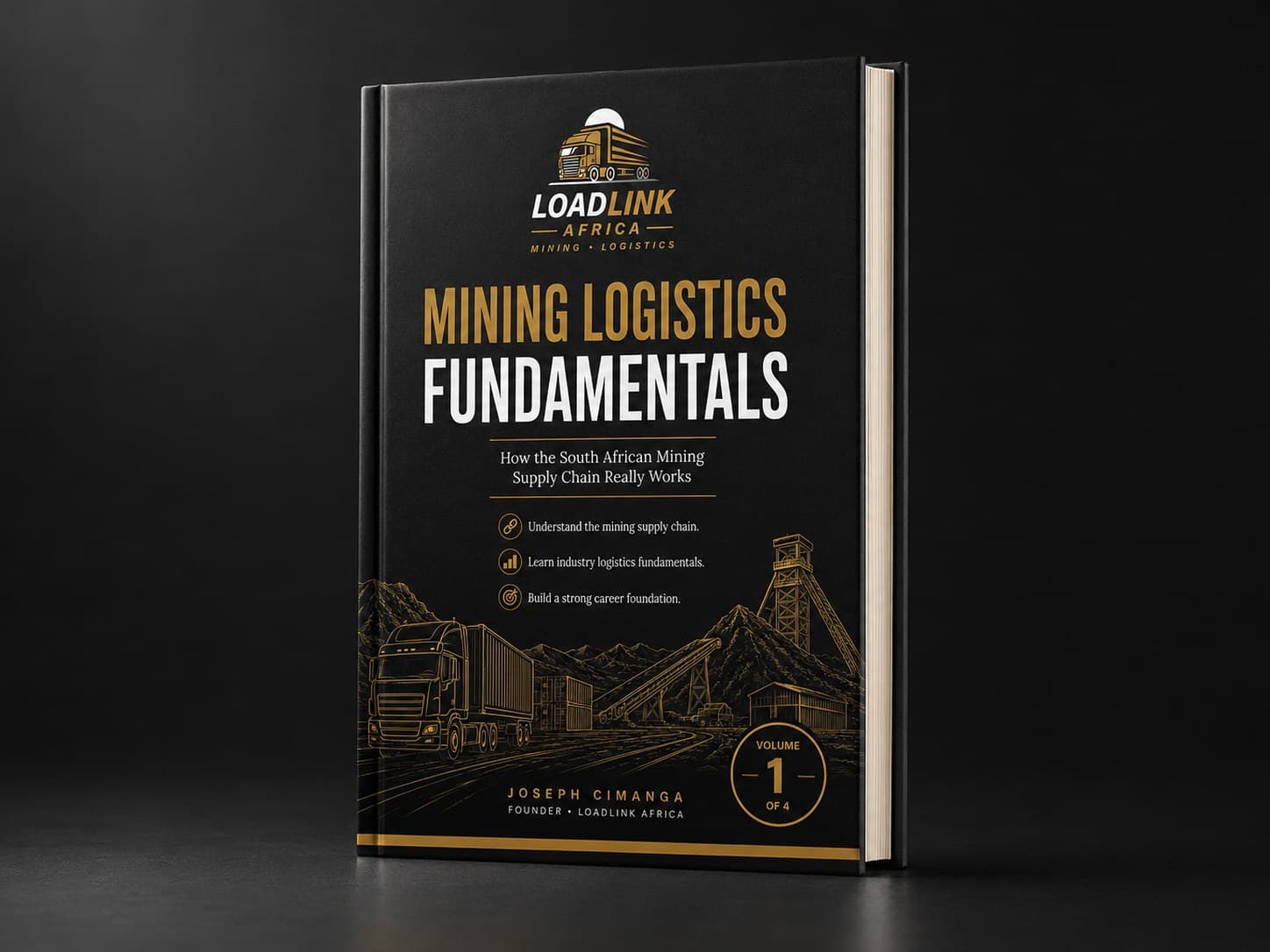
Mining Logistics Fundamentals
Volume 1 of the LoadLink Africa Professional Mining Logistics Series — a practical guide to how mining logistics actually works in South Africa, from the mine-to-plant and mine-to-port supply chain through commodity-specific transport, road versus rail, warehousing, procurement, and the export documentation that gets cargo out the door.
- Format
- Digital PDF Guide
About this resource
Mining Logistics Fundamentals opens the LoadLink Africa Professional Mining Logistics Series, a four-volume series built around how mining logistics is actually practiced in South Africa rather than generic freight theory.
It walks through the full chain a mining company depends on: understanding the mining value chain, moving commodities such as coal, iron ore, platinum group metals, chrome, manganese and gold, loading and hauling ore from pit to plant, stockpile and yard management, the road-versus-rail decision, warehousing and inventory for mining sites, procurement and supplier relationships, and the export documentation and Incoterms needed to move product through ports such as Richards Bay, Durban and Saldanha Bay.
Each chapter closes with practical takeaways so the material can be applied directly, not just read — making this the starting point for anyone who needs a working understanding of mining logistics before specialising further.
What you’ll learn
- Understand the mining value chain and where logistics fits into it
- Recognise the transport and handling requirements specific to major South African commodities
- Understand mine-to-plant operations — loading, hauling and stockpile management
- Weigh up road versus rail transport for different commodities and distances
- Understand warehousing, inventory and procurement practices on mining sites
- Navigate the export documentation and Incoterms used to move cargo through South African ports
Who it’s for
- Logistics, supply chain and mining engineering students building foundational knowledge
- New logistics coordinators and transport operators entering the mining sector
- Procurement professionals working with mining suppliers
- Anyone evaluating a career or business move into mining logistics
Why this book matters
Mining logistics knowledge tends to stay locked inside the teams who already do the work, or scattered across freight and supply chain material that isn't written for mining conditions. Mining Logistics Fundamentals closes that gap with a single, practical reference for how commodities actually move from South African mines to plant, port and customer.
Related products
 GuideOrder via WhatsApp
Winning Mining Transport Contracts
Volume 2 of the LoadLink Africa Professional Mining Logistics Series — a practical guide to winning, pricing and running mining transport contracts in South Africa, covering RTMS and compliance, tender writing, contract pricing, and how to grow beyond a single client.
 GuideOrder via WhatsApp
Fleet Management for Mining Logistics
Volume 3 of the LoadLink Africa Professional Mining Logistics Series — a practical guide to running a fleet under mining conditions, covering vehicle selection, preventive maintenance, fuel and tyre management, driver management, safety, technology and the KPIs that predict profitability.
 GuideOrder via WhatsApp
Mining Logistics Operations & Cost Optimisation
Volume 4 of the LoadLink Africa Professional Mining Logistics Series — a practical guide to running multiple mining contracts at once, covering capacity allocation, multi-site scheduling, portfolio cash flow, activity-based costing and the team structure needed to scale.